Forging and casting each shape material differently. The selected process depends on geometry, production needs and the evidence required for the application.
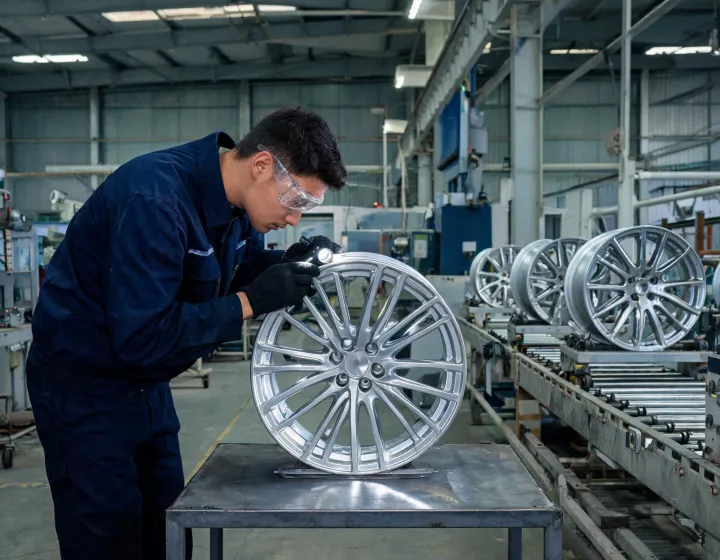
Our approach
Wheel development brings manufacturing decisions, dimensional controls and application knowledge together.
Forging and casting each shape material differently. The selected process depends on geometry, production needs and the evidence required for the application.
Critical mounting and rim surfaces are defined by drawings. PCD, center bore and offset must be checked against the vehicle interface.
Surface preparation and coating choices influence appearance and service conditions. The specification should identify the intended finish and inspection criteria.
Dimensional records, test results and revision history help make a release decision traceable.
Diameter, width and profile define the wheel envelope.
Manufacturing route and tooling affect the available design choices.
Runout and interfaces require measurable acceptance limits.
Quantity, packaging and schedule belong in the project brief.
Review the first sample against the approved drawing before broader production decisions.
Assess the impact of material, tooling or geometry revisions on fitment and validation.
Confirm the relevant standard, market and product configuration rather than assuming a universal approval.
Good decisions start with a shared understanding of vehicle interfaces, operating conditions and acceptance criteria. Questions raised early are easier to resolve than assumptions embedded in a drawing.
A useful engineering record identifies what was reviewed, which revision was tested and where a result applies. That context makes collaboration more effective across design, procurement and quality teams.
Tell us about the wheel platform and the evidence your organization needs.